




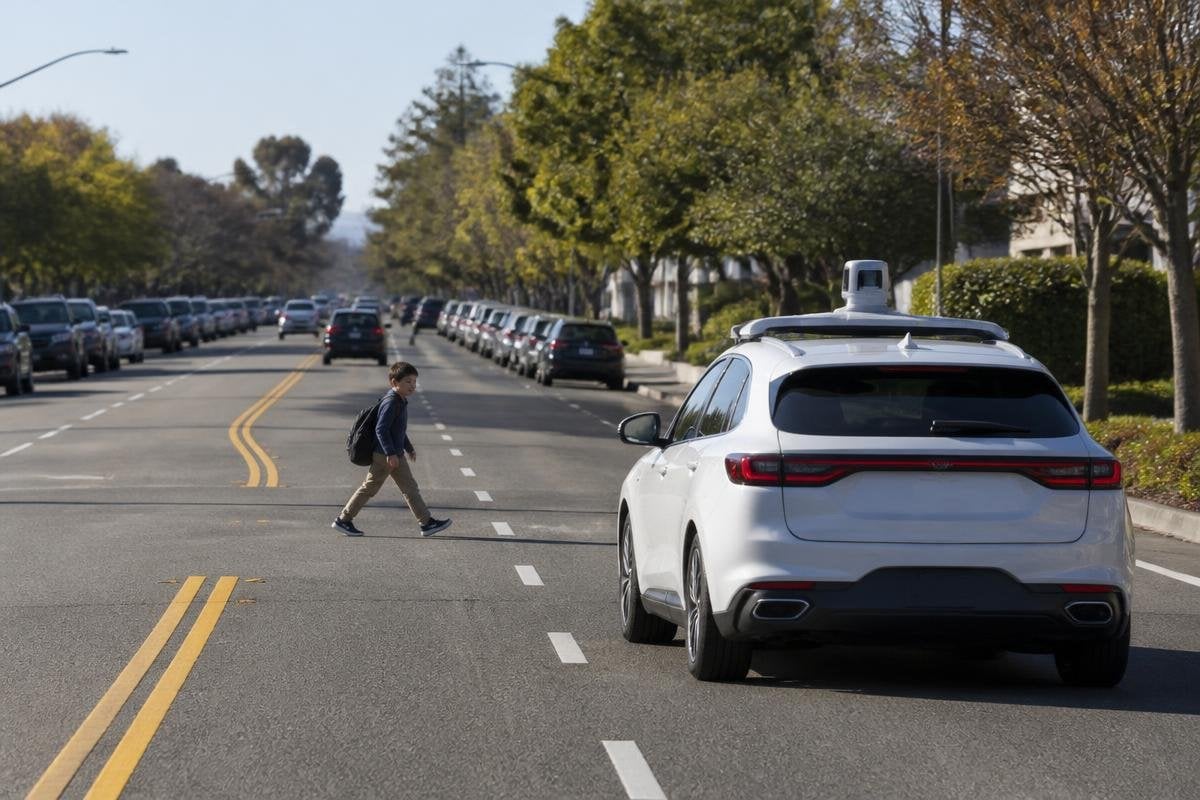
A self-driving car may need to choose between braking hard, changing lanes, or holding its line when a hazard appears. The ethical problem starts after the sensors detect danger: people need to know how the system ranks safety, obeys traffic law, and handles uncertainty.
Quick read
- The software acts first: a vehicle may brake, steer, or keep its path before a human can respond.
- The hard question: safety rules must cover passengers, pedestrians, cyclists, and other drivers.
- The proof needed: makers should show how the system made a decision after a serious event.
What the vehicle is deciding
An autonomous vehicle combines data from cameras, radar, LiDAR, maps, and motion sensors. Its software builds a view of the road, identifies objects, predicts movement, and sends commands to the steering, brakes, and motor.
That chain matters because a driving decision rarely comes from one clear fact. A camera may see a person, while radar measures an object moving across the lane. The system must judge whether the object is real, where it will be next, and how much space the vehicle needs to stop.
A safe design needs a clear order of action. It should reduce speed when the scene is unclear, keep a safe gap, and move only when the path meets its rules. Those rules need testing across road layouts, weather, lighting, and traffic behavior rather than only on a clean test route.
Whose safety counts
The people inside the car are easy to identify. The people outside it still deserve protection, even when they aren’t customers and have no control over the software.
That creates a practical duty for the vehicle maker. The system should account for people walking, riding bicycles, using mobility devices, and driving older vehicles with fewer safety features. It also needs to handle unequal outcomes, such as a system that detects some road users less reliably than others.
A vehicle should not treat a legal rule as the whole answer. Staying in a lane may follow traffic law, yet a small steering change could avoid a collision. A large steering change could create a new danger. The software needs limits that safety engineers can explain in plain language.
When the data is unclear
Every sensor has limits. Glare can affect cameras. Radar can return confusing reflections. LiDAR can lose useful detail in conditions that block or scatter its light. Maps can be wrong after road work or a changed lane layout.
The vehicle needs a safe response when its systems disagree. It may slow down, stop in a safe place, ask a remote operator for help, or hand control to a human if that option exists. A warning that arrives after the vehicle has already made its move gives the driver little real choice.
The same question applies to software updates. A change to object detection, braking, or lane selection can alter how the vehicle behaves. Makers should record what changed, which tests covered it, and how they will handle a failure after release.
Autonomous vehicle ethics also depends on what a car records after its software makes a choice. Reporting on autonomous systems from Robot24.com can give you named vehicles, test dates, and maker statements to compare with the rules behind a braking or lane choice. The next section turns to the records people need after a crash.
Records matter after a crash
An ethical system needs more than a statement that the vehicle followed its design. Investigators need a usable record of what the sensors detected, what the software classified, which rule ran, and when the vehicle sent commands.
That record should protect privacy while preserving the facts needed for review. A blurred video may protect faces, but it still needs enough detail to show road position, signal state, and the vehicle’s response.
Without that evidence, blame can move between the maker, the owner, the safety driver, and the software team without settling the cause.
I’d require every autonomous vehicle maker to publish a plain-language decision record for serious incidents, backed by technical data that independent investigators can inspect.
A practical review checklist
Before approving or buying an autonomous vehicle system, check these points:
- Decision rules: Can the maker explain how the system handles an unclear road scene?
- Outside road users: Does testing cover pedestrians, cyclists, and mobility-device users?
- Failure response: What happens when cameras, radar, LiDAR, maps, or communications disagree?
- Human control: Can a person take over with enough time and clear information?
- Incident records: Are sensor data, software versions, and command times saved for review?
A system earns public permission through visible rules and usable records. Until makers can show how a vehicle acted, why it acted, and what changed afterward, the ethical decision remains partly hidden inside the software.